
 madhumitasaha.in
Exploring Nature and Art: A Travelogue on the French Riviera
As the world continues to fight its battle against Covid-19, and while we are all restricted to our homes to maintain social distancing and optimum levels of safety, the tourism industry is probably one of the worst hit sectors. Travelling has taken a backseat. I thought it would be reassuring if we can share interesting stories of travel in these times of confinement, when our minds long for an experience of the spirit of wanderlust.
Our trip to the south of France in 2019 was a truly memorable experience. After months of planning, we finally reached the Rivieravia Paris. The Cote D’ Azur better known as the French Riviera in English, is the Mediterranean Coastline of the Southeast corner of France.The term Côte d’Azur was coined by a writer, Stephen Liégeard, who called his 1887 travel book on the Riviera La Côte d’Azur and described the area as a ‘coast of light, of warm breezes, and mysterious balmy forests’. Published during the Riviera’s golden era, it improved accessibility and news of the favourable local climate and turned a relatively obscure piece of coastline into one of the most fashionable places in Europe. Viewed as garden of Eden, the south of France was nature’s haven for artists and authors.Since then, famous names have settled there to work, imbuing the area with the kind of creative credibility rarely found outside the world’s largest cultural capitals. Beyond the glamour and extravaganza, I was in my quest for seeking the true motivation behind creative minds –and explore how nature’s bounty provided the perfect setting to bring out the best of creativity in art and literature over the past century.
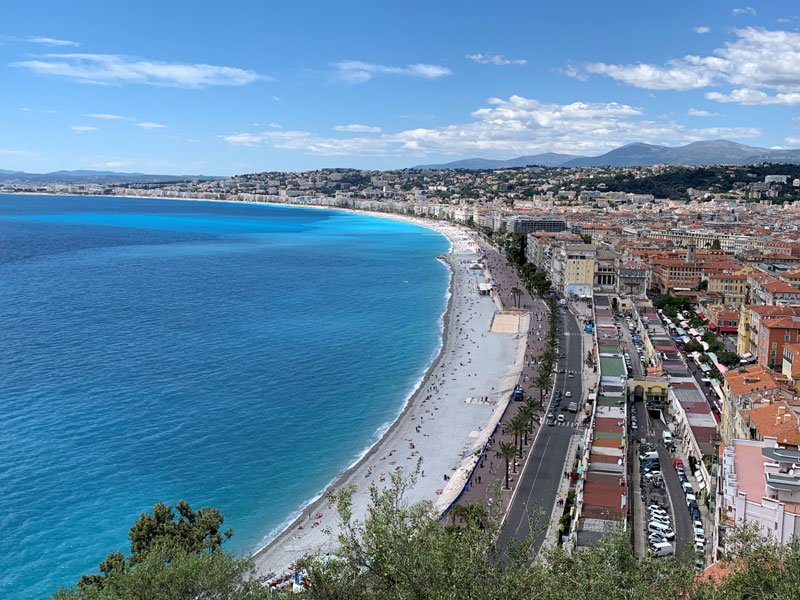
Any trip to the French Riviera begins with the vibrant city of Nice, overlooking the sparkling waters of the Mediterranean. Set between the sea and the mountains, around one of the finest bays in the world, the “Baie des Anges”, Nice is now the 5th biggest city in France. The city permanently opened itself up to the world in the second half of the 19th century with the influx of a large number of aristocrats and leaders from across Europe who were seduced by the beauty and climate of what was then a small Mediterranean town. In 1860 Nice became French and is proud of showing visitors its different identity, forged by a history that goes back to the Nikaia, pre-dating the Romans. We started our tour of the city with a climb up to La Colline du Chateau or the Castle Hill which offers a panoramic view of the Baie Des Anges.
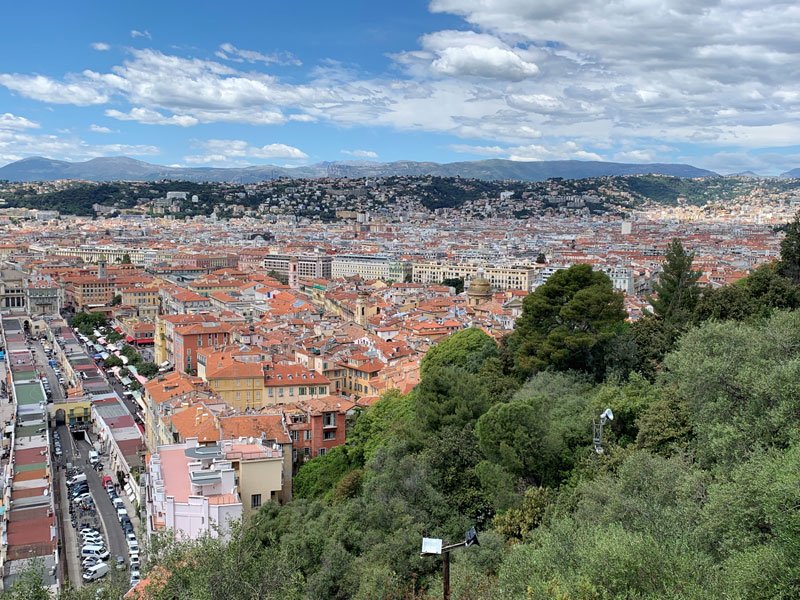
The Old Town Nice or “Vieux Nice” is truly a historic delight for any traveller. Winding your way down the slender streets, you may get the feeling that you are seeing Nice for what she genuinely is and has always been. The culture of the Riviera practically spills from the shops and eateries lining the paths. Restaurants dine their guests outdoors to Nice’s culinary delights such as SaladeNicoise, Pistou Soup, or the famed dish of Ratatouille which originated in this very city. CoursSaleya, the famed market-square of Vieux Nice, is a center of activity and visual delight that any visitor must not miss. With fresh produce and vibrant flowers overflowing from a myriad of stands, your senses will be fully charmed and utterly wooed. Whether it is the man-made beauty of chromatically colored houses reaching tall into the Mediterranean sun, or the organic splendor of lush greenery and deeply tinted waters, or perhaps the delectable aroma of fresh seafood and herbs, Nice, in the French Riviera contains a world full of beautiful wonders ready to be touched, tasted, and delighted in. Nice truly is exquisite in every way.
As per my itinerary, the next destination to explore was the art village of St Paul De Vence. With its labyrinth of cobblestoned alleys, imposing ramparts dating back to medieval times and views down to Mediterranean sea, the charming village of saint Paul de Vence was avisual delight.At the highest point in the village there was once a castle, but unfortunately today only a small building is left in which the city hall is located. Right next to it stands a church from the 14th century, which was raised to collegiate status (Collégiale de la Conversion-de-Saint-Paul) in the 17th century. Nearby is the Chapel of White Penitents from the 17th century (La Chapelle des PénitentsBlancs), which was restored and decorated at the beginning of the 21st century by the Belgian artist, Jean-Michele Folon.
Following the source of artistic inspiration which still lives on and an air of old school mystique still hangs over the village. The illustrious artitsts who once lived in or frequented the village- includes Marc Chagall, Pablo Picasso, Henri Matisse and Jean-Michel Folon. Chagall who among other things, is known for having painted the ceiling of the auditorium at the Opera de Paris, lived in the city for three decades completing some of his most famous works there. Chagall’s immortal artworks Le mariee, Les amourex de Vence and La rencontre were all painted during his time as a resident of Saint Paul De Vence.
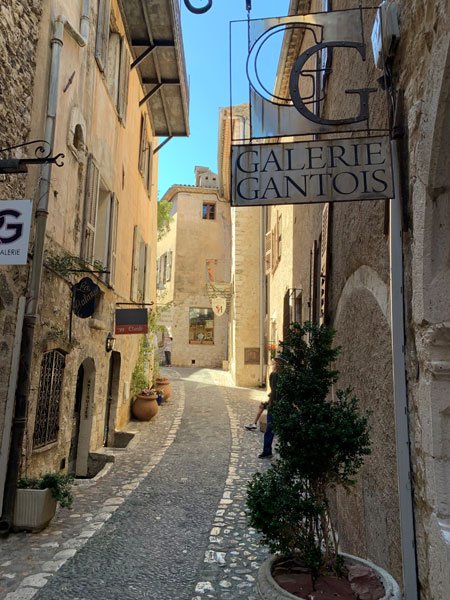
Belgian painter and sculptor Jean-Michel Folon discovered Saint-Paul de Vence in the mid-1970s, and his regular visits to the village spanned three decades. One of his most impressive oeuvres is housed in the 17th-century White Penitents Chapel, otherwise known as the Folon Chapel. It contains treasures which range from stained glass windows and sculptures to paintings and – shimmering at the far end of the sanctuary – Folon’s pièce de résistance, a rainbow-hued mosaic which took him a decade to complete.
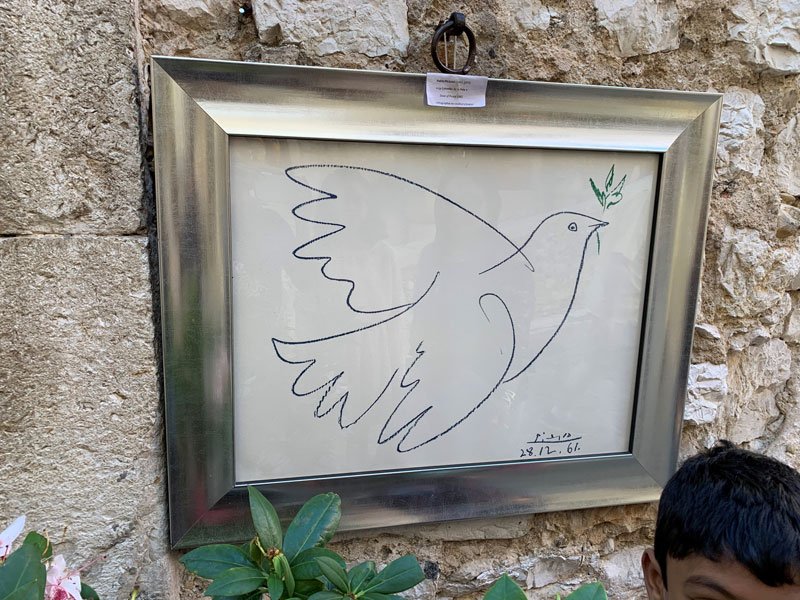
Artists were drawn to St Paul de Vence in droves, and quite unsurprisingly the village enjoys a reputation as a hunting ground for art lovers. Within the ramparts, the most established galleries have been exhibiting modern art collections for several decades. Situated in a 16th Century stone house, the muse de saint Paul hosts a collection of contemporary art of Chagall and Andre Verdet.
Near the old town of Saint-Paul is another attraction, purportedly a treat for art lovers – FondationMaeght – a private museum with collections of European modern and contemporary art. A temple to modern and contemporary art which reached its 50th anniversary in 2014 and nestled in the midst of sprawling gardens a short stroll from the village, the foundation began as a personal project for a tragedy-stricken Aimé and Marguerite Maeght, following the death of their young son.Designed by Catalan architect JosepLluísSert, the FondationMaeght boasts one of the largest and most important collections of 20th century art in Europe. Many of the Maeghts’ artist friends collaborated with them, creating eye-catching works that were seamlessly woven into the museum’s landscape – from Joan Miró’s sculpture and ceramics-filled labyrinth and Chagall’s mosaic mural, to Alberto Giacometti’s peaceful courtyard and Georges Braque’s pool and stained glass windows. Indeed the museum is a treasure trove for art enthusiasts.
Our following destination was the village of Antibes, which attracted the famed impressionist painter Claude Monet, modern artist Nicolas de Staël, and even the celebrated Pablo Picasso, who bought the Château Grimaldi as a residence, which is now the Museum bearing his name. Writers who fell under the city’s spell include Somerset Maugham and Guillaume Musso. Almost every conurbation along the coast has a writer attached to it. They came here to flee everything from Prohibition in America (F. Scott Fitzgerald spent much of the 1920s there with his wife, Zelda) to bad marriages (Somerset Maugham and H. G. Wells both escaped failing relationships there). British censors drove D. H. Lawrence and James Joyce out of the UK, and Berthold Brecht and Vladimir Nabokov had run from more despotic regimes and all ended up in this quaint village. As a result, parts of the Riviera are now immortalised in literature. Artists were also inspired, and captured the magic of the area in landscapes or echoed its colour palette throughout much of their wider work. From the Impressionists up to the present day, many of the biggest names in art painted in the South of France.
Claude Monet lived and painted in Antibes-depicting the village from many angles-and Auguste Renoir had his home and studio in CagnessurMer, which is now a museum dedicated to his work. Georges Braque, Pablo Picasso and Henri Matisse also spent extended periods on the Côte d’Azur. Picasso, in particular, enjoyed an extremely productive year in Antibes, before moving to Cannes, Mougins and Vallauris (which now houses a museum devoted to his ‘War and Peace’ panels).
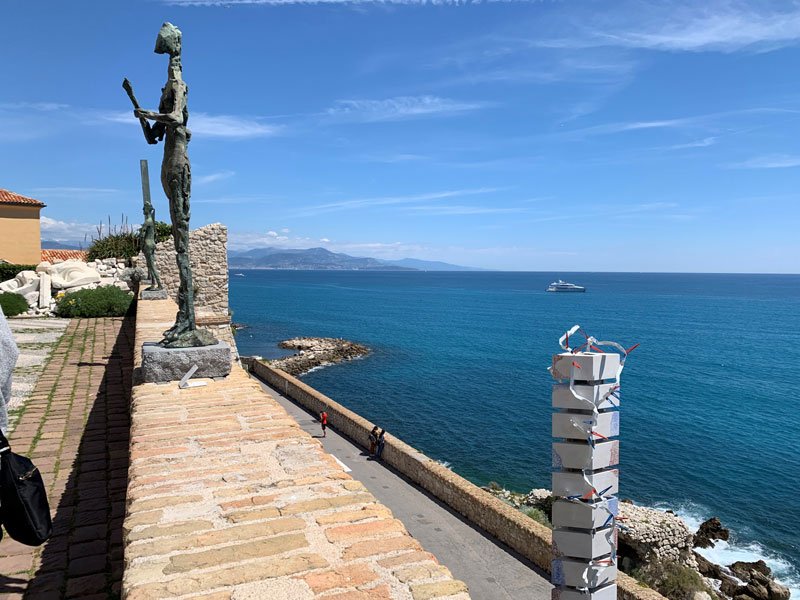
The Picasso Museum in Antibes was the first museum in the world devoted entirely to this artist. Established in 1966 in Grimaldi Castle (Château Grimaldi), it is where Pablo Picasso had his studio 20 years earlier. He left 23 paintings and 44 drawings however, which today belong to the museum’s collection.Among the artist’s works that are exhibited in Antibes is his famous La Joie de vivre (Joy of Life). In total there are 245 of Picasso’s works in the museum and you can also admire the ceramics he decorated, as well as the works of other artists. A spacious terrace in the museum complex overlooking the waters offers a spectacular view of the Mediterranean.
Any trip to the Riviera is incomplete without visiting Cannes. Long before it was synonymous with the International Film Festival, fashion and extravaganza, the city of Cannes was a shimmering sea side destination. Climbing the winding staircases and passing the pastel-coated homes in Le Suquel, the city’s old quarter offers theMusee de la Castre a home for ethnographic art in a medieval fortress overlooking the marina and the Croisette. Another quaint village Eze was a revelation in medieval architecture. The medieval village of Eze in the craggy cliffs high above the sea, is a delightful step back in time. The winding alleyways, stone buildings, 14th century Chapels, and the dramatic Mediterranean backdrop make this tiny village truly a memorable experience.
In all, the trip to the Riviera was an exploration of history, culture, art, creation, leisure, nature, mildness and flavours. It offered a lifetime experience to explore the very best of artistic creativity in the past century amidst the grandeur of nature.Truly, the magnificence of nature reflected in art in the French Riviera is one of the finest creative achievementsin human history.